Wednesday, 7 October 2015

Everything about the latest-Apple ios latest Yosemite 10.10

Getting to know Apple's latest operating system


VERDICT

Yosemite still needs a bit of polish before its final release, but that's to be expected. More importantly, it does a good job of offering more information, and making it clearer. So far, this looks like an essential update for Mac users.

PROS:

Lovely, clear design
Great Spotlight features
Huge widgets potential

CONS:

Dark Mode not that useful
Design inconsistencies
Different green button behaviors

Later this year, Apple will release OS X 10.10 Yosemite, the latest version of its Mac desktop operating system. It will run on all the same Mac models as OS X 10.9 Mavericks, and will be a free download and update.

That's all expected, but there are some unexpected changes coming with Yosemite. For a start, Apple is offering a public beta of the operating system, something Apple hasn't done since it was preparing to launch OS X in 2000.

Anyone can apply, but bear in mind this release is for testing bugs, not a demo of the finished OS. If you apply and are successful, make sure you follow Apple's advice on backing up and installing somewhere safe carefully.

I've been trying a beta build provided by Apple, though, and have had a chance to dig into the more important changes for most users: the extra features. Unfortunately, because I've only been able to preview Yosemite alone, and not iOS 8 or the new features of iCloud, I actually can't give my opinion on some of Yosemite's best features: Continuity and the new iCloud options.

Yosemite offers the ability to pass tasks between it and iOS (known as Handoff), and to take phone calls on your Mac, send SMS texts from your Mac, and set up your iPhone as a mobile hotspot instantly from your Mac. iCloud Drive, meanwhile, gives you a very smart way to get data between iOS and Macs without having to put any effort in. These are easily Yosemite's most exciting possibilities, so it's a shame I can't talk about them.

Design


That's not to say there wasn't a lot to dig into. The biggest and most obvious change to Yosemite is the design, of course. Taking a leaf from iOS 7's slightly transparent book, windows are simpler, and some have a see-through element, revealing soft hints of the windows beneath them.

It was a contentious look in iOS, but I'll stick my neck out and say that it really works in Yosemite. The change hasn't been as dramatic as the iOS switch was, with OS X retaining more of its earlier style, and having already made small steps towards slightly simple, 'flatter' design in aspects of Mavericks.


It's more colorful in some spots, less colorful in others, but pretty much always striking - at least, coming from using Mac OS X 10.9 or Windows 8 day-to-day. The new Helvetica font looks great on Retina screens, and the brighter, simpler icons match the starker window designs nicely.

On non-Retina, though, it doesn't sing quite as strongly. Small text can be hard to read, especially in areas such as the progress bar when copying files. Here the text is presented as mid-grey lettering on a light-grey background, which just isn't that legible.

Text layered on transparent background or over images can also be more difficult to read. There's simply less definition to the text, so in a busy setting, it can sometimes get lost a little.

The new font loses a bit of elegance in its more jagged form, too. It's not hard to read, but it has definitely been designed with Retina in mind. Nothing here is so bad to be a show-stopper by any means, but there's no denying that OS X 10.10 is much more at home on Retina than not.

The Dark Mode is a nice touch in theory, turning some white elements of the OS dark black to make thing easier on the eyes in lower light level, but it's kind of only half a feature. It makes the Menu bar and Dock darker, but that's it - all the shiny light  greyand white windows are still bright.


The simplification aspect of Yosemite isn't about stripping away options so much as just putting them somewhere a little tidier. In some cases this means putting buttons that used to sit just below the title bar higher up, so less space is used for window chrome and more for whatever you're doing in the apps themselves.

At least, that's the idea. In some apps, it's been included well (such as Safari and Maps), but it's not consistent. For many apps, including Mail and Preview, the icons sit below the title as they always have.

This occasional change goes hand-in-hand with the new translucent elements. Again, they're not present in every app, and when they are it is sometimes surprising. Safari and Maps have translucent titles bars, enabling you to get a glimpse of the content within those apps that's 'hidden' underneath the interface.

But Messages is different. It's half translucent (the list of people on the left) and half solid (the actual message on the right) - a division that stretches all the way through the title bar, leaving a strange half 'frosted glass'-half solid effect


Then you have Mail, which has a solid title bar and a Messages-like split view below, except both the list of emails on the right and the message itself are solid white. If you bring up the Mailbox list to view your email folders that is translucent, but that translucency doesn't extend up into the title bar, as it does with Messages.

Popup windows are usually translucent (things like Share windows or details of a location in the Maps app, for example), but at the moment, I'm not sure this new element of Yosemite is as consistent as it could be.


Another thing that can trip you up is that Apple has moved the 'fullscreen' button from the right-hand corner of a window to the green button on the top-left, which used to have the slightly nebulous function of fitting the window to the content. That functionality is still there if you hold alt and roll over the green button, though.

However, not all apps support full screen, including Apple's own apps, which means that sometimes the green button is a plus sign, indicating it's the old behavior, and sometimes it's two arrows, indicating it can go full screen. Having two behaviors from one button color means you won't know what it does until you roll the mouse over it to see the icon, which seems a little odd.

Apple has definitely given OS X 10.10 a striking new look, and I really like it, but I wonder if the company might yet do a bit more tinkering with the interface in different apps before release. The inconsistency doesn't affect usability; the apps works in it seamlessly.

How To Enable System UI Tuner In Android Marshmallow 6.0

If you are a Cyanogenmod Roms users then you will be very familiar to this setting as it gives you freedom of editing notification drawer tiles according to your needs,you can rearrange quick settings toggle, show/hide items on the status bar, enable embedded battery percentage in the battery indicator, etc.As this feature is not present in earlier versions of Stock android like kitkat and lollipop for that you need to have a root access......
But in the latest version of android i.e Android Marshmallow 6.0 gives you freedom of editing the system drawer tiles without root.So ,lets start the step by step guide of activating and using Sytem UI Tuner in android marshmallow 6.0.


#How to activate System UI Tuner in Android M 6.0

1.Firstly , Pull down the Quick Settings menu now press and
hold the Settings cog in the top right corner for around 5 – 8 seconds and release.

2.Now  you will see a popup telling you that System UI Tuner has been added to your settings.Like below screenshot.


3. Now, go to your Settings and you will see an option for ‘System UI Tuner’ under ‘About Phone' option.

#How to use System UI Tuner

1.How to enable battery percentage in Android Marshmallow


To show battery percentage in status bar, go to Settings, scroll down to System UI Tuner. Enable ‘Show embedded battery percentage’ .

2.How to Rearrange Tile in quick settings

To rearrange quick settings toggle, tap on Quick Settings, then tap and hold on an icon. You should see a delete bin  icon now drag any icon to the bin to delete it.

3.How to show/hide Items in Status Bar

To show/hide items on the status bar, tap on the Status bar option in your System UI Tuner. You can remove all the options you do not want to appear in your status bar from System UI Tuner option.

Tuesday, 6 October 2015

Can you Update Windows 10 on Pirated Windows 7/8/8.1 ? Explained !

Microsoft Just release Windows 10 Update  all over the world for Free of cost on windows 7/windows 8 and windows 8.1.User who are using Original Windows 7/8/8.1 are getting Windows 10 automatic update directly on your PC for free this time Microsoft release Windows 10 with far better feature and Performance as compared to Windows 8 and 8.1.Below are the Some question that asked by many of the user on the Internet you should know!
►Will pirated user get Windows 10 update ?

Now the question is Can a user using Pirated window installed in there PC will get Windows 10 update or not and the answer is YES they will ! you can update to latest operating system Windows 10 without any worries.Yesterday Windows chief Terry Myerson explained that:

"We are upgrading all qualified PCs, genuine and non-genuine, to Windows 10.”
After announcement of Mr.Terry Myerson it is clear that User who are using pirated Windows can also update to Windows 10 for free.


►How to Update Pirated Windows to Windows 10 for free?

Now we know that Pirated windows you can also get free windows 10 Update.But how answers is Simple just Go to Control Panel->Open System & security->Turn ON Windows Update->Click on Check updates  it will Notify you for New Windows 10 update click on install and let it download after downloading it will automatically update you current version of windows 7/8/8.1 to latest Windows 10. Even After You are Using Pirated Windows Cool huhh!
Done!
►Why  Microsoft is Giving away free Windows 10 update to Pirated user too ?

 Now After reading the above insane you actually thinking that that's not fare to the user who got genuine windows.But there is something different idea behind this free windows 10 update for pirated windows by Microsoft.As the company is Struggled long due to Pirated windows of windows xp,7,8,8.1.
The idea here is that with a legitimate copy of Windows in hand, even pirates may be more likely to shell out for Microsoft’s other products like Skype and Office 365.

Some time The pirates are not actually pirates there may be Probability of fraud done by the sellers also.As they can install pirated Windows to the Buys PC without getting in the users Knowledge.Hence users faced difficulty in getting prior Update of Windows.So for the sake of Company's image and reputation this time Microsoft is giving free update to both genuine and non genuine buyers.As they also Know that after the launch of windows 10 there will a Crack standing ready to Crack The Windows 10 and make it pirated ☺where KMS is one of the most popular windows Cracker.

 ►Will your Windows get Genuine or Licensed after Updating Windows 10.

Now the big Question is that will the user get Genuine or Licensed windows after updating it from Non genuine or Fake License pirated windows.Microsoft Clearly said that NO. They will not get License windows or Genuine windows after auto Updating The windows will still treated as UN-Licensed.
According to Microsoft:

“Although non-Genuine PCs might be able to upgrade to Windows 10, the upgrade will not change the genuine state of the license. This applies across geographies. Customers that are improperly licensed before the upgrade will be improperly licensed after the upgrade. We will provide a mechanism for non-genuine Windows 10 PC devices to “get genuine” via the new Windows Store, whether they are upgraded versions of Windows or purchased. We will have details on this as we get closer to launch.” 

 So I Hope now you get all your answers of your question if not Comments box is all yours.

Monday, 5 October 2015

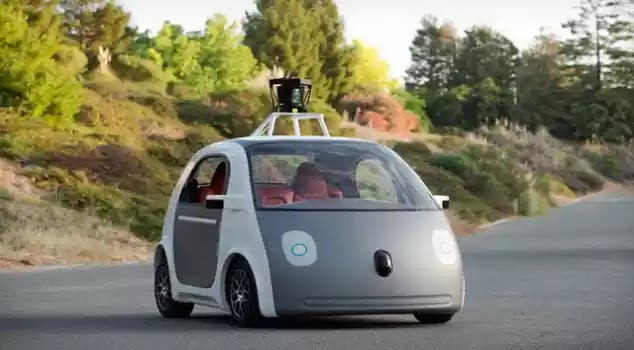
Google diverless car- A technology for safer and brighter future


The Google Self-Driving Car, commonly abbreviated as SDC, is a project by Google X that involves developing technology for autonomous cars, mainly electric cars. The software powering Google's cars is called Google Chauffeur. Lettering on the side of each car identifies it as a "self-driving car". The project is currently being led by Google engineer Sebastian Thrun, former director of the Stanford Artificial Intelligence Laboratory and co-inventor of Google Street View. Thrun's team at Stanford created the robotic vehicle Stanley which won the 2005 DARPA Grand Challenge and its US$2 million prize from the United States Department of Defense. The team developing the system consisted of 15 engineers working for Google, including Chris Urmson, Mike Montemerlo, and Anthony Levandowski who had worked on the DARPA Grand and Urban Challenges.

Legislation has been passed in four U.S. states and Washington, D.C. allowing driverless cars.

In May 2014, Google presented a new concept for their drivetesting
ar that had neither a steering wheel nor pedals,[11] and unveiled a fully functioning prototype in December of that year that they planned to test on San Francisco Bay Area roads beginning in 2015. Google plans to make these cars available to the public in 2020.

Technology


The project team has equipped a number of different types of cars with the self-driving equipment, including the Toyota Prius, Audi TT, and Lexus RX450h,Google has also developed their own custom vehicle, which is assembled by Roush Enterprises and uses equipment from Bosch, ZF Lenksysteme, LG, and Continental.

Google's robotic cars have about $150,000 in equipment including a $70,000 LIDAR system. The range finder mounted on the top is a Velodyne 64-beam laser. This laser allows the vehicle to generate a detailed 3D map of its environment. The car then takes these generated maps and combines them with high-resolution maps of the world, producing different types of data models that allow it to drive itself.

As of June 2014, the system works with a very high definition inch-precision map of the area the vehicle is expected to use, including how high the traffic lights are; in addition to on-board systems, some computation is performed on remote computer farms.

Road testing


A Toyota Prius modified to operate as a Google driverless car, navigating a test course
In 2012, the test group of vehicles included six Toyota Prius, an Audi TT, and three Lexus RX450h, each accompanied in the driver's seat by one of a dozen drivers with unblemished driving records and in the passenger seat by one of Google's engineers. By May 2015, that fleet consisted solely of 23 Lexus SUVs.

Google's vehicles have traversed San Francisco's Lombard Street, famed for its steep hairpin turns, and through city traffic. The vehicles have driven over the Golden Gate Bridge and around Lake Tahoe.The system drives at the speed limit it has stored on its maps and maintains its distance from other vehicles using its system of sensors.The system provides an override that ws a human driver to take control of the car by stepping on the brake or turning the wheel, similar to cruise control systems already found in many cars today.

On March 28, 2012, Google posted a YouTube video showing Steve Mahan, a resident of Morgan Hill, California, being taken on a ride in Google's self-driving Toyota Prius. In the video, Mahan states "Ninety-five percent of my vision is gone, I'm well past legally blind". In the description of the YouTube video, it is noted that the carefully programmed route takes him from his home to a drive-through restaurant, then to the dry cleaning shop, and finally back home.

In August 2012, the team announced that they have completed over 300,000 autonomous-driving miles (500,000 km) accident-free, typically have about a dozen cars on the road at any given time, and are starting to test them with single drivers instead of in pairs.Four U.S. states have passed laws permitting autonomous cars as of December 2013: Nevada, Florida, California, and Michigan.A law proposed in Texas would establish criteria for allowing "autonomous motor vehicles".

In April 2014, the team announced that their vehicles have now logged nearly 700,000 autonomous miles (1.1 million km). In late May, Google revealed a new prototype of its driverless car, which had no steering wheel, gas pedal, or brake pedal, being 100% autonomous.

In June 2015, the team announced that their vehicles have now driven over 1 million miles, stating that this was "the equivalent of 75 years of typical U.S. adult driving", and that in the process they had encountered 200,000 stop signs, 600,000 traffic lights, and 180 million other vehicles. Google also announced its prototype vehicles were being road tested in Mountain View, California.During testing, the prototypes' speed cannot exceed 25 mph and will have safety drivers aboard the entire time.

Traffic accidents

As of July 2015, Google's 23 self-driving cars have been involved in 14 minor traffic accidents on public roads, but Google maintains that in all cases the vehicle itself was not at fault because the cars were either being manually driven or the driver of another vehicle was at fault.

In June 2015, Google founder Sergey Brin confirmed that there had been 12 accidents as of that date, eight of which involved being rear-ended at a stop sign or traffic light, two in which the vehicle was side-swiped by another driver, one of which involved another driver rolling through a stop sign, and one where a Google employee was manually driving the car.

In July 2015, three Google employees suffered minor injuries when the self-driving car they were riding in was rear-ended by a car whose driver failed to brake at a traffic light. This was the first time that a self-driving car collision resulted in injuries.

Limitations


As of August 28, 2014 the latest prototype has not been tested in heavy rain or snow due to safety concerns. Because the cars rely primarily on pre-programmed route data, they do not obey temporary traffic lights and, in some situations, revert to a slower "extra cautious" mode in complex unmapped intersections. The vehicle has difficulty identifying when objects, such as trash and light debris, are harmless, causing the vehicle to veer unnecessarily. Additionally, the lidar technology cannot spot some potholes or discern when humans, such as a police officer, are signaling the car to stop. Google projects having these issues fixed by 2020.

Friday, 2 October 2015

Bionic eyes - The best prospect in biotechnology

How does a "bionic eye" allow blind people to see?


Introduction to the Bionic Eye


This is what the world looks like to someone with macular degeneration.
Joe McNally/Getty Images
In the past 20 years, biotechnology has become the fastest-growing area of scientific research, with new devices going into clinical trials at a breakneck pace. A bionic arm allows amputees to control movements of the prosthesis with their thoughts. A training system called BrainPort is letting people with visual and balance disorders bypass their damaged sensory organs and instead send information to their brain through the tongue. Now, a company called Second Sight has received FDA approval to begin U.S. trials of a retinal implant system that gives blind people a limited degree of vision.

The Argus II Retinal Prosthesis System can provide sight -- the detection of light -- to people who have gone blind from degenerative eye diseases like macular degeneration and retinitis pigmentosa. Ten percent of people over the age of 55 suffer from various stages of macular degeneration. Retinitis pigmentosa is an inherited disease that affects about 1.5 million people around the globe. Both diseases damage the eyes' photoreceptors, the cells at the back of the retina that perceive light patterns and pass them on to the brain in the form of nerve impulses, where the impulse patterns are then interpreted as images. The Argus II system takes the place of these photoreceptors.

The second incarnation of Second Sight's retinal prosthesis consists of five main parts:

A digital camera that's built into a pair of glasses. It captures images in real time and sends images to a microchip.
A video-processing microchip that's built into a handheld unit. It processes images into electrical pulses representing patterns of light and dark and sends the pulses to a radio transmitter in the glasses.
A radio transmitter that wirelessly transmits pulses to a receiver implanted above the ear or under the eye
A radio receiver that sends pulses to the retinal implant by a hair-thin implanted wire
A retinal implant with an array of 60 electrodes on a chip measuring 1 mm by 1 mm
The entire system runs on a battery pack that's housed with the video processing unit. When the camera captures an image -- of, say, a tree -- the image is in the form of light and dark pixels. It sends this image to the video processor, which converts the tree-shaped pattern of pixels into a series of electrical pulses that represent "light" and "dark." The processor sends these pulses to a radio transmitter on the glasses, which then transmits the pulses in radio form to a receiver implanted underneath the subject's skin. The receiver is directly connected via a wire to the electrode array implanted at the back of the eye, and it sends the pulses down the wire.

When the pulses reach the retinal implant, they excite the electrode array. The array acts as the artificial equivalent of the retina's photoreceptors. The electrodes are stimulated in accordance with the encoded pattern of light and dark that represents the tree, as the retina's photoreceptors would be if they were working (except that the pattern wouldn't be digitally encoded). The electrical signals generated by the stimulated electrodes then travel as neural signals to the visual center of the brain by way of the normal pathways used by healthy eyes -- the optic nerves. In macular degeneration and retinitis pigmentosa, the optical neural pathways aren't damaged. The brain, in turn, interprets these signals as a tree and tells the subject, "You're seeing a tree."

It takes some training for subjects to actually see a tree. At first, they see mostly light and dark spots. But after a while, they learn to interpret what the brain is showing them, and they eventually perceive that pattern of light and dark as a tree.

The first version of the system had 16 electrodes on the implant and is still in clinical trials at the University of California in Los Angeles. Doctors implanted the retinal chip in six subjects, all of whom regained some degree of sight. They are now able to perceive shapes (such as the shaded outline of a tree) and detect movement to varying degrees. The newest version of the system should offer greater image resolution because it has far more electrodes. If the upcoming clinical trials, in which doctors will implant the second-generation device into 75 subjects, are successful, the retinal prosthesis could be commercially available by 2010. The estimated cost is $30,000.

Researchers are already planning a third version that has a thousand electrodes on the retinal implant, which they believe could allow for facial-recognition capabilities.


Steps to Unblock Yourself from someone’s WhatsApp Account

Steps to unblock yourself from someone’s whatsapp account

Open WhatsApp
Go to Settings
Hit on Account
Now click on Delete my account (Don’t worry you can run it again)
Enter your phone number and delete your account.
Now Uninstall WhatsApp messenger.
After the WhatsApp is uninstalled properly, restart your phone or device.
Go to Play Store and Install WhatsApp again.
Enter the asked details to start again with it and yes your own phone number.
Taddaaaa!!!! All done; now you’ve been unblocked from your friend’s WhatsApp account without letting them know a bit. Enjoy and start texting them.
Hope you’ve unblocked yourself and easily able to text them. But deleting your WhatsApp account will have lead you to forcefully leave all the groups in which you were a member so ask them to add you again. And an important note is that if you’ve the latest version of WhatsApp this work around is not for them. This will only work on the older version.

Thursday, 1 October 2015

Best android hacking apps


12 Best Android Hacking Apps

#1 Hackode

Hackode : The hacker’s Toolbox is an application for penetration tester, Ethical hackers, IT administrator and Cyber security professional to perform different tasks like reconnaissance, scanning performing exploits etc.
#2 Androrat

Remote Administration Tool for Android. Androrat is a client/server application developed in Java Android for the client side and in Java/Swing for the Server.
#3 APKInspector

APKinspector is a powerful GUI tool for analysts to analyse the Android applications. The goal of this project is to aide analysts and reverse engineers to visualize compiled Android packages and their corresponding DEX code.

#4 DroidBox

DroidBox is developed to offer dynamic analysis of Android applications.
#5 Burp Suite

Burp Suite is an integrated platform for performing security testing of web applications. Its various tools work seamlessly together to support the entire testing process, from initial mapping and analysis of an application’s attack surface, through to finding and exploiting security vulnerabilities.
#6 zANTI

zANTI is a comprehensive network diagnostics toolkit that enables complex audits and penetration tests at the push of a button. It provides cloud-based reporting that walks you through simple guidelines to ensure network safety.
#7 Droid Sheep

DroidSheep can be easily used by anybody who has an Android device and only the provider of the web service can protect the users. So Anybody can test the security of his account by himself and can decide whether to keep on using the web service.
#8 dSploit

dSploit is an Android network analysis and penetration suite which aims to offer to IT security experts/geeks the most complete and advanced professional toolkit to perform network security assessments on a mobile device.
#9 Arpspoof

Arpspoof is a tool for network auditing originally written by Dug Song as a part of his dsniff package. This app redirects traffic on the local network by forging ARP replies and sending them to either a specific target or all the hosts on the local network paths.
#10 Shark for Root

Traffic sniffer, works on 3G and WiFi (works on FroYo tethered mode too). To open dump use WireShark or similar software, for preview dump on phone use Shark Reader. Based on tcpdump.
#11 Nmap for Android

Nmap (network mapper) is one the best among different network scanner (port finder) tool, Nmap mainly developed for Unix OS but now it is available on Windows and Android as well. Nmap for android is a Nmap apps for your phone! Once your scan finishes you can e-mail the results. This application is not a official apps but it looks good.
#12 SSHDroid

Android Secure Shell: Secure shell or SSH is the best protocol that provides an extra layer of security while you are connecting with your remote machine.SSHDroid is a SSH server implementation for Android. This application will let you to connect to your device from a PC and execute commands (like “terminal” and “adb shell”).